Owning a Piece of San Diego History: Mission Hills, Bankers Hill, South Park & North Park
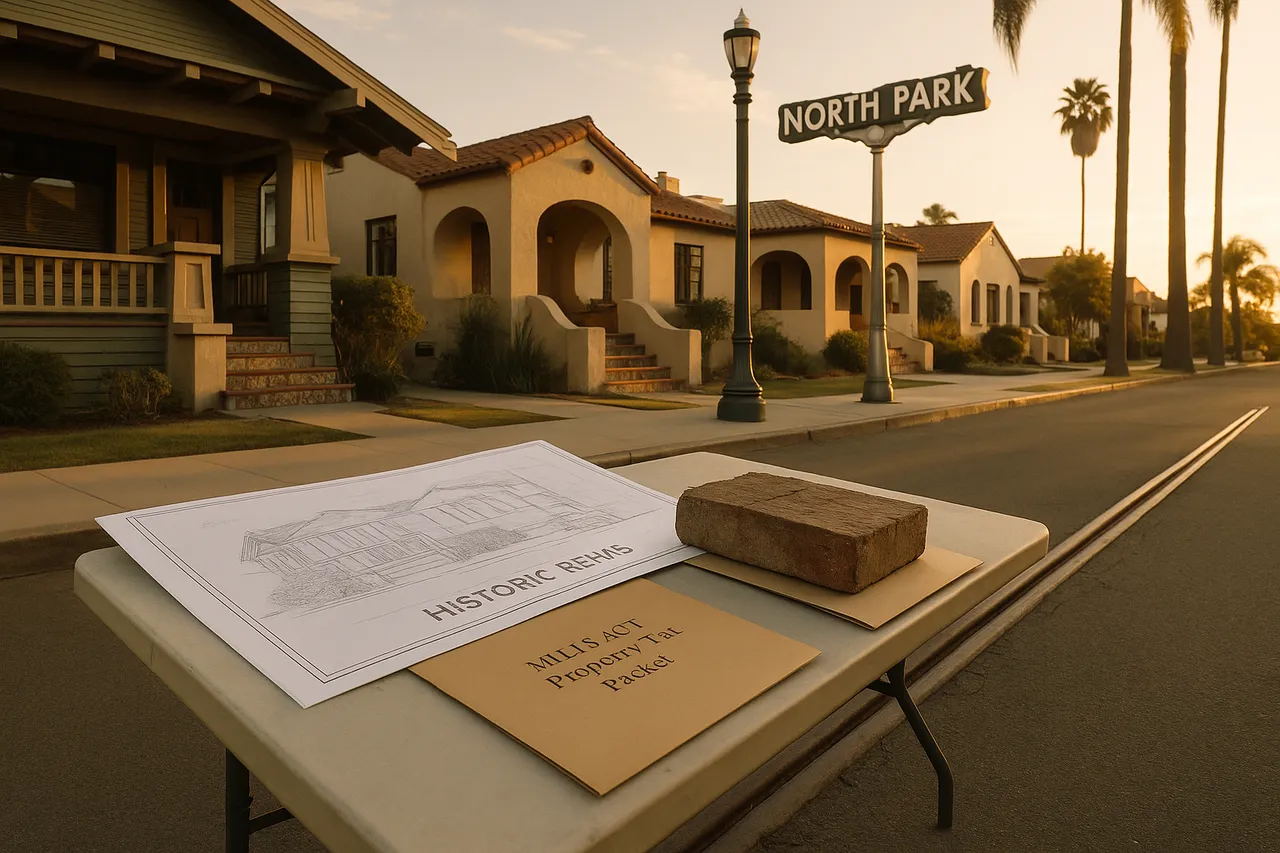
Why These Historic Neighborhoods Still Captivate
San Diego’s early streetcar suburbs (Mission Hills, Bankers Hill, South Park, and North Park) blend front-porch charm with real investment upside. Think craftsman bungalows with arroyo stone, prairie-influenced foursquares, and Spanish revivals with red-tile roofs. Walk Orange Avenue in Coronado for the grand resort vibe at Hotel del Coronado, then compare it to the intimate canopy streets around Fort Stockton Dr. in Mission Hills. You’ll feel how history shapes lifestyle block by block.
Countywide, San Diego had about 5,500 active listings in May with a median list price near $939,000 (Realtor.com), and true historic homes are a small slice of that inventory. Scarcity is the story here. When a time-capsule craftsman hits the market in North Park near Morley Field or along Juniper St. in Bankers Hill, competition is fierce because buyers aren’t just purchasing square footage. They’re buying character, location, and often a tax advantage.
Mills Act 101: The Quiet Superpower for Historic Buyers
The Mills Act is California’s incentive that can dramatically reduce property taxes for designated historic properties. In the City of San Diego, eligible homes under a Mills Act contract often realize meaningful annual savings, money you can redirect into period-appropriate restoration.
What buyers love:
- Tax savings that grow with your plans: Funds can support roof restoration, wood window repair, or seismic upgrades.
- Long-term value: Historic authenticity tends to hold demand through market cycles.
What to understand upfront:
- Obligations: You’ll commit to a rehabilitation plan and periodic reporting. Think stewardship, not a set-and-forget discount.
- Not every home qualifies: You’ll need a designated resource (e.g., HRB designation) or contribute to a historic district’s integrity. In South Park’s Golden Hill/South Park historic pockets, a porch alteration can be the difference between contributing and non-contributing status.
Pro tip: If you’re comparing cash flow, line up a Mills Act estimate early. It can offset the premium you pay versus newer construction elsewhere: say, a modern Oceanside listing like 212 Pacific Street (4bd/2.5ba, 2,600 sqft, $2,799,000) that trades on new-build convenience rather than historic character.
ARB and Design Review: What It’s Really Like to Renovate
In historic overlay zones, exterior changes are reviewed, often by the Historical Resources Board (HRB) and, in some districts, an Architectural Review Board (ARB) or staff-level historic review. Here’s the on-the-ground reality in San Diego’s vintage cores:
- Windows & Doors: Original wood sash windows are sacred. Rebuild or restore when possible; if you must replace, expect like-for-like profiles and true divided lights. Vinyl is usually a nonstarter on a landmark home.
- Additions: Sensitive, stepped-back additions can work if they’re distinguishable yet compatible. In Mission Hills, a rear kitchen expansion with matching stucco, eave depth, and roof pitch gets traction; a street-facing second story with clashing proportions will stall.
- Street Presence: Historic districts cherish front porches, low garden walls, and mature street trees. Alterations that diminish these hallmarks trigger pushback, especially on view corridors in Bankers Hill along Sixth Ave.
- Sustainability: Solar can be possible with thoughtful placement. Ground mounts or rear-facing arrays are favored over panel fields visible from the street.
Timeline and budget-wise, plan for:
- Extra design time: Add 6-12 weeks for drawings, historic research, and review cycles.
- Skilled trades: Craftsman-era details (ribbon grain oak, clinker brick, period tile) need pros. Price accordingly.
If you need a breather from review acronyms, hop to nearby neighborhoods for comparison. In Poway, the "city in the country", large-lot living at 16925 Old Coach Rd (4bd/4.5ba, 4,183 sqft, $3,299,999) delivers space and new-build systems without historic constraints. It helps calibrate your priorities before you commit to a Mills Act path.
Lifestyle and Investment: How It All Pencils Out
Beyond numbers, these neighborhoods live beautifully:
- Mission Hills: Coffee on West Lewis St., evening walks along Fort Stockton Dr., canyon breezes, and quick access to Hillcrest’s dining.
- Bankers Hill: Balboa Park at your doorstep; brunch on Fifth Ave.; planes drifting into Lindbergh overhead, urban romance with skyline peeks.
- South Park: Fern St. boutiques, dog-friendly patios, and a true village pulse. Craftsman-lined streets make every stroll feel like a postcard.
- North Park: 30th & University energy, breweries, and Morley Field tennis. Craftsman bungalows and Spanish cottages mix with savvy ADU additions.
Investment angles I discuss with clients:
- Tax-adjusted yield: Mills Act savings can improve your effective cap rate versus a non-historic home at the same price point.
- Exit liquidity: Fix the right things (foundation, roof, systems) and preserve the right things (siding, windows, built-ins). Buyers pay for authenticity.
- ADUs with sensitivity: A discreet rear ADU can add income without sacrificing curb appeal, gold in North Park.
For balance, keep other San Diego markets on your radar. If you’d prefer move-in ready with scale, larger suburban homes like 7781 Rocio in Carlsbad (4bd/3ba, 3,161 sqft, $2,250,000) or golf-course living at 12135 Caminito Corriente in Rancho Bernardo (4bd/3ba, 2,904 sqft, $1,497,000) trade charm for turnkey convenience and HOAs that streamline exterior choices.
Bottom line: If you love craftsmanship, walkable blocks, and the idea of stewarding history, San Diego’s historic neighborhoods reward patience. With the right plan, Mills Act benefits can offset carrying costs, while high buyer demand for period homes supports long-term value.
Correction, September 26, 2026: An earlier version of this post misstated San Diego County's active listing count and median price because of a data error on our end. The figures above now use Realtor.com's San Diego County data for May 2026.
Looking for help with historic homes, from Mills Act assessments to ARB-friendly design strategies?
Contact SamGet the monthly letter
San Diego market notes from Sam, plus investor insights from Prop2Profit.
1-2 emails a month. Unsubscribe anytime.